By Pablo Bravo
74% of people use social media to decide where to eat (MGH, 2024). Not Google. Not Yelp. Social media. And 40% of diners visit a restaurant specifically because they saw food photos online. If your restaurant's social media is an afterthought — or worse, full of stock photos — you're losing customers to the place down the street that posts real food.
The good news: restaurant content is inherently visual, shareable, and craving-inducing. You don't need a marketing degree. You need a phone, 30 minutes during prep, and these ideas.
This is one guide in our restaurant marketing series. For broader social strategy, see our social media marketing guide, and pair it with how to get more Google reviews — the two compound for local discovery.
Key Takeaways
- 74% of consumers use social media to choose where to eat
- User-generated content converts 4x better than branded photos
- Instagram and TikTok are the two essential platforms for restaurants
- 4-5 posts per week is enough — batch during prep time
Why Does Social Media Work Differently for Restaurants?
74% of consumers use social media to decide where to eat, and user-generated food content converts at 4x the rate of branded restaurant photos (MGH, 2024). No other industry triggers impulse purchases from a single photo the way food does. Someone scrolling Instagram at 5 PM sees a plated dish and thinks "that's dinner tonight." A dentist can't do that. A plumber can't do that. Your product is visual, emotional, and instantly cravable, which hands restaurants a built-in advantage most local businesses will never have. The scroll-to-visit path is short: see the dish, tap the profile, check the hours, book a table. When 62% of diners check a restaurant's social presence before visiting (MenuTiger, 2025), your feed is the storefront window. A dark or empty profile reads as "closed" even when the doors are open.
The numbers back this up. 86% of diners post about their meal when it looks good (Cropink, 2026), and user-generated content from customers drives 4x higher conversion than your own branded photos. That means your best marketers are the people already sitting at table 6 with their phones out.
TikTok has made this even more powerful. 61% of diners say TikTok food content directly influences where they eat (Cropink, 2026). A single viral clip of your signature dish can fill tables for weeks. Chila's, a Texas taco spot, saw lines around the block after one plating video crossed a million views. You can't buy that reach; you can only earn it by filming what you already make every day.
20 Social Media Ideas That Fill Tables
Visual food content dominates restaurant engagement, with 86% of diners posting about their meal when the presentation is photogenic (Cropink, 2026). Restaurants that mix behind-the-kitchen clips, user-generated content, and interactive polls see the strongest follower growth and table bookings across Instagram and TikTok. The trap most owners fall into is treating every post like an ad. A feed of "20% off" graphics teaches followers to ignore you. The fix is a content diet: roughly half food, a quarter people, a quarter engagement and events. Below are 20 ideas sorted into those buckets, each one filmable on a phone during a normal shift. Steal the ones that fit your kitchen, ignore the rest, and rotate so the feed never feels like a coupon book. None of these need a videographer, a studio light, or a caption you'd have to write twice.
Food Content
1. Behind-the-kitchen shots. Film your chef plating a dish in real time. Raw, unfiltered. The sizzle, the garnish, the final presentation. This is your highest-performing content type — a knife hitting a chile relleno or cheese pulling off a slice stops the scroll instantly.
2. Menu reveals. Launching a new dish? Tease it 3 days before. Show the ingredient selection, then prep, then the final plate. Build anticipation the way a movie drops a trailer before release.
3. Daily specials. Post your daily special by 11 AM. People decide lunch by noon. Be in their feed when hunger hits, not at 2 PM when they've already eaten a sad desk sandwich.
4. Ingredient sourcing. Visit your local farmer or supplier? Film it. "This morning's tomatoes came from [Farm Name], 20 miles away." This builds trust and separates you from chains that ship frozen.
5. Recipe snippets. Share a simplified version of a popular dish. Sounds counterintuitive, but it drives visits. People try it at home, realize yours is better, and come in for the real thing.
People Content
6. Chef spotlight. Introduce your chef. Show their background, what inspires them, their favorite dish on the menu. Customers connect with people, not logos.
7. Staff stories. Your bartender has been with you for 5 years? That's a story. Regular customers love knowing the people who serve them.
8. Customer features. "Meet our regulars" series. Ask loyal customers for a quick selfie and a quote about their favorite dish. They'll share it with their network for free.
Event Content
9. Live music and events. Film 15 seconds of a live performance. Post it during the event with "happening now." Creates FOMO for next time.
10. Happy hour countdown. Post at 3 PM every Friday: "Happy hour starts in 2 hours. Your table is waiting." Consistent timing builds habit.
11. Seasonal menu launches. Treat seasonal menus like product launches. Countdown posts, first-look photos, opening-night stories.
12. Holiday specials. Valentine's Day, Mother's Day, New Year's Eve. Create event-specific posts 2 weeks before. These drive reservation bookings — and they're some of the highest-intent audiences you'll reach all year.
User-Generated Content
13. Repost customer photos. When customers tag you, repost to your stories and feed. This is your best content — and it costs zero effort.
14. Review screenshots. A glowing Google review with a photo? Screenshot it and share. Social proof from real customers outperforms any ad you could run.
15. Tagged stories roundup. Create a weekly story highlight of every customer who tagged you. Encourages more tags, which feeds you more free content next week.
Engagement Content
16. Polls. "Which new dish should we add: A or B?" People love voting. The losing dish? Launch it next quarter as "the one you asked for."
17. This-or-that. "Pizza night or pasta night?" Dead simple. High engagement. Works on both Instagram Stories and X/Twitter.
18. Guess the ingredient. Close-up photo of a dish with one unusual ingredient. First person to guess gets a free appetizer. Drives comments.
19. Caption contest. Post a funny kitchen moment. "Best caption wins a $25 gift card." Cheap promotion that generates dozens of comments. (For more low-cost attention plays, see our guerrilla marketing ideas.)
20. Behind-the-scenes fails. Dropped a cake? Burnt the bread? Post it. Authentic moments get more engagement than polished content. Your audience appreciates honesty.
Which Platforms Should Restaurants Use?
Instagram and TikTok are the two essential platforms for restaurants in 2026. 60% of Instagram users actively browse food content, while 61% of diners say TikTok food videos directly influence where they eat (Cropink, 2026). Facebook still drives local event attendance, but organic reach has fallen sharply and now works best as an events board rather than a daily feed. Don't spread yourself across five apps. Pick one primary platform based on your audience, add Google Business Profile as your discovery anchor, and treat everything else as optional. A neighborhood bistro with an older crowd may skew Facebook and Instagram; a fast-casual spot chasing under-30 diners lives on TikTok. The mistake isn't choosing the "wrong" platform. The mistake is choosing all of them and posting well on none. Master one channel, then expand only when the first runs on autopilot.
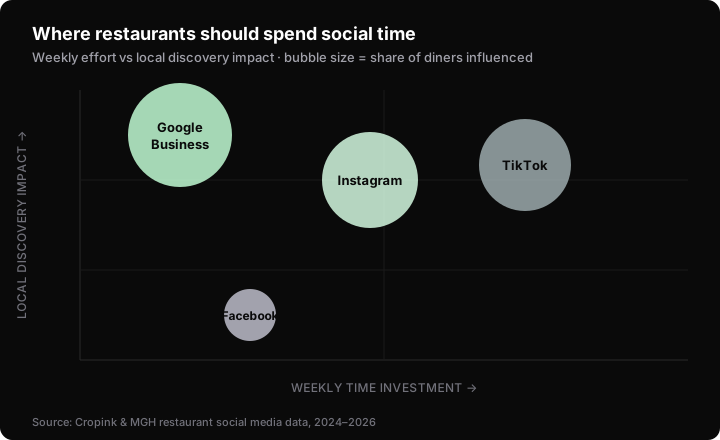
Instagram (Primary). Your visual portfolio. Best for food photos, Reels, and Stories. 60% of Instagram users browse food content regularly. Use location tags and 3-5 local hashtags per post so nearby diners surface you in the Explore tab. Pin your three best dishes to the top of the grid.
TikTok (Growth). Your viral discovery channel. 61% of diners say TikTok content influences where they eat. Short, raw videos win over polished ones. Post 3-5 times a week and reply to comments with video responses to feed the algorithm. Our TikTok marketing guide breaks down the posting cadence in detail.
Google Business Profile (Discovery). Not technically social media, but your #1 local discovery tool. Keep photos, hours, and menu updated weekly, and post specials directly to your profile. We cover the full setup in our Google Business Profile guide for restaurants, and reviews in our Google reviews guide.
Facebook (Events/Local). Organic reach is nearly dead, but Facebook Events still drives local attendance. Use it for live music, holiday specials, and seasonal launches — not daily food posts.
How Do Busy Restaurant Owners Find Time to Post?
Restaurant owners can maintain a consistent social presence in roughly 65 minutes per week using a batch content system. Sprout Social (2026) reports that businesses posting 4-5 times weekly outperform those posting sporadically, and batching content during prep windows makes that frequency realistic even for solo operators. The secret isn't more time; it's capturing footage while you're already cooking. Prep is a film set: mise en place, plating, the first pull of an espresso shot. Shoot 10 seconds here and there, dump the clips into a folder, and you'll have a week of content before service starts. Then assign one person to post. A sous chef or front-of-house lead who's already glued to their phone can own the schedule. You don't need an agency or a $2,000-a-month content package. You need a repeatable 15-minute filming habit and someone accountable for hitting publish on the days below.
The Batch Schedule
| Day | Content | Time |
|---|---|---|
| Monday | Film 3-4 kitchen clips during prep | 15 min |
| Tuesday | Post best clip + write captions for week | 20 min |
| Wednesday | Post daily special by 11 AM | 5 min |
| Thursday | Repost 1-2 customer photos/tags | 10 min |
| Friday | Post happy hour or weekend event | 5 min |
| Weekend | Reply to comments and DMs | 10 min |
Total: ~65 minutes per week. Batch-film on your slowest prep day so it never competes with service. If you only remember one thing here: shoot first, edit later. The footage is the bottleneck, not the captions.
5 Mistakes That Kill Restaurant Social Media
Stock photos, inconsistency, and ignoring comments are the fastest ways to kill a restaurant's social presence. 73% of diners choose a competitor over restaurants that don't respond online (Tablein, 2026). Video outperforms static images on every major platform, yet many restaurants still rely on still photos exclusively. Most social failures aren't creative problems; they're discipline problems. Owners start strong in January, post daily for three weeks, then vanish when the dinner rush hits. The algorithm punishes that stop-start pattern harder than it punishes mediocre content. The other silent killer is a promotions-only feed that treats followers like a coupon list. Fix these five habits and you'll outperform 90% of the restaurants in your zip code, most of which either post nothing or post nothing but discounts. None of these fixes cost money. They cost attention and a little consistency, which is exactly why so few competitors bother.
1. Stock photos of food. Nothing signals "we don't care" like a stock photo of a generic pasta dish. Use real photos of your actual food. Phone quality is fine.
2. Ignoring negative comments. 73% of diners will choose a competitor if a restaurant doesn't respond online (Tablein, 2026). Reply to every comment — positive and negative. A calm reply to a bad review reads as professionalism to the hundred people watching silently.
3. Inconsistent posting. Posting 5 times one week and disappearing for a month destroys your algorithmic reach. Consistency beats perfection.
4. Only posting promotions. "20% off this weekend!" is not a content strategy. Mix in food content, people content, and engagement posts — our lazy content marketing guide shows how to keep that mix filled without extra work.
5. Not using video. In 2026, video outperforms static images on every platform. Even a 10-second clip of a sizzling pan gets more engagement than a professional food photo. If you have to choose between a perfect still and a shaky clip, post the clip.
Frequently Asked Questions
How often should a restaurant post on social media?
4-5 posts per week across your primary platform (Instagram or TikTok). Daily stories are a bonus but not required. Consistency matters more than frequency — 3 posts every week beats 10 posts one week and zero the next.
Should restaurants use TikTok?
Yes. 61% of diners say TikTok food content directly influences where they eat. You don't need polished videos. Film behind-the-kitchen clips during prep — authentic, raw content outperforms professional production on TikTok. Even 10-second clips of plating or sizzling pans work.
What's the best time to post restaurant content?
Post lunch content by 11 AM (people decide lunch by noon). Post dinner content by 4 PM. Post weekend event content on Thursday or Friday. Post daily specials in the morning. The timing matters because you're triggering hunger-based decisions.
How do you get customers to post about your restaurant?
Make dishes visually shareable — presentation matters. Create an "Instagram wall" or photogenic spot. Include your handle on receipts and table tents (great spots to also grow an email list). Repost every customer photo and tag them back. 86% of diners post about their meal if it looks good.
Should restaurants pay for social media ads?
Not until you have 3 months of consistent organic posting. Then boost your best-performing posts for $5-10/day targeting a 10-mile radius. Organic content tests what works. Paid amplifies winners. Don't skip the testing phase.
Sources
- MGH, "Social Media and Restaurant Marketing Study," retrieved 2026-06-29, https://www.mghus.com/
- Cropink, "Restaurant Social Media Statistics 2026," retrieved 2026-06-29, https://cropink.com/restaurant-social-media-statistics
- MenuTiger, "Restaurant Social Media Statistics 2025," retrieved 2026-06-29, https://www.menutiger.com/blog/restaurant-social-media-statistics
- Tablein, "Social Media Marketing Statistics for Restaurants," retrieved 2026-06-29, https://www.tablein.com/blog/restaurant-social-media-marketing-statistics
- Sprout Social, "Social Media Statistics 2026," retrieved 2026-06-29, https://sproutsocial.com/insights/social-media-statistics/