By Pablo Bravo
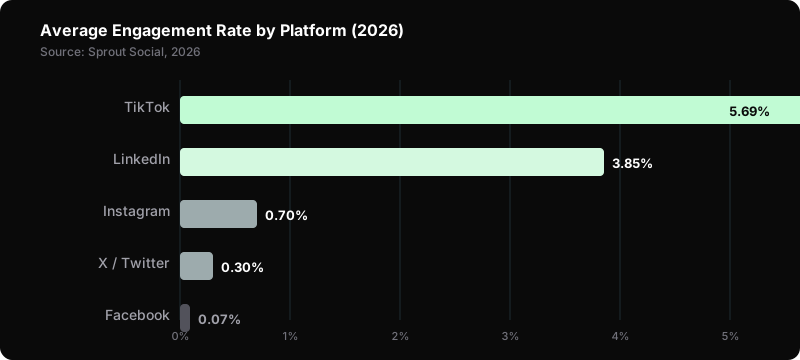
Social media in 2026 rewards consistency over budget. Sprout Social reports that 90% of local businesses use social media as part of their marketing, and 78% rely on it to drive revenue. But organic reach keeps shrinking — Facebook business pages now reach 0.07-0.15% of followers organically. The platforms that still give small businesses free distribution? TikTok, LinkedIn, and short-form video on Instagram.
This guide helps you pick the right platforms, build a content strategy you can maintain in 3-5 hours per week, and measure results that actually matter. No vanity metrics. No "post consistently" fluff. Just what works for founders doing their own marketing.
If you're starting from scratch with marketing, read our marketing 101 framework first.
Key Takeaways
- TikTok leads engagement at 5.69%; Facebook organic reach is nearly dead at 0.07%
- LinkedIn personal profiles get 8x more engagement than company pages
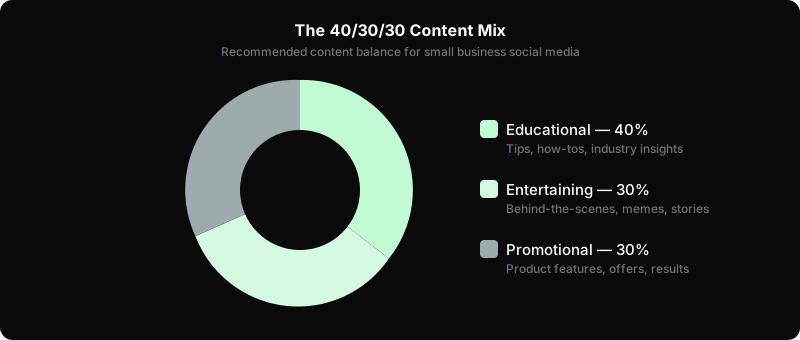
- The 40/30/30 content mix: educational, entertaining, promotional
- 3-5 hours per week is enough with batch creation and repurposing
What Changed in Social Media for 2026?
Three shifts define social media marketing in 2026: short-form video dominance, algorithm penalties for engagement bait, and AI content detection. TikTok's average engagement rate of 5.69% crushes every other platform (Sprout Social, 2026). Meanwhile, Facebook organic reach has dropped to historic lows — 0.02% to 0.23% for most business pages.
LinkedIn's 2026 algorithm now measures "Depth Score" — dwell time, comment depth, saves, and shares — instead of just likes. Comments carry 15x more algorithmic weight than reactions. And every platform now detects and suppresses AI-generated content that reads like AI.
For small businesses, this means: short-form video wins, genuine engagement matters more than posting frequency, and carousels outperform single images by 109% on Instagram.
The opportunity? While big brands struggle to adapt, small businesses with authentic voices and founder-led content punch above their weight.
How Do You Pick the Right Platform?
Platform engagement rates vary by over 80x in 2026: TikTok delivers 5.69% while Facebook pages average just 0.07%, according to Sprout Social. LinkedIn personal profiles generate 8x more engagement than company pages. Picking the wrong platform wastes your limited hours on a channel that won't reward the effort.
Don't try to be everywhere. Pick 1-2 platforms where your audience actually spends time, then do those well. Here's an honest comparison for 2026.
| Platform | Best For | Organic Reach | Time Investment | Content Type |
|---|---|---|---|---|
| TikTok | B2C, restaurants, retail | High (5.69% engagement) | 4-6 hrs/week | Short video |
| B2B, SaaS, services | High for personal profiles | 3-5 hrs/week | Text, carousels | |
| Visual brands, food, lifestyle | Medium (0.5-1.0%) | 5-7 hrs/week | Reels, carousels | |
| X/Twitter | Tech, media, founders | Medium-low | 2-3 hrs/week | Text, threads |
| Local businesses, 40+ demo | Very low (0.07%) | 2-3 hrs/week | Groups, events | |
| YouTube | Education, tutorials | Slow build, long tail | 6-10 hrs/week | Long video |
| E-commerce, recipes, DIY | Medium, long tail | 2-3 hrs/week | Images, infographics |
Decision Framework
Selling to consumers? Start with TikTok or Instagram. Visual platforms drive impulse discovery.
Selling to businesses? Start with LinkedIn. Personal profiles get 8x engagement over company pages. Post as the founder, not the brand — our LinkedIn content strategy for B2B founders breaks down exactly how.
Running a local business? Start with Google Business Profile (not a social platform, but your #1 discovery tool) — see how to get more Google reviews — then add Instagram or Facebook for community.
Don't have time for video? LinkedIn and X work with text-only content. You can post in 15 minutes.
How Do You Build a Content Strategy in 3-5 Hours Per Week?
The 40/30/30 content mix, 40% educational, 30% entertaining, 30% promotional, consistently outperforms promo-heavy feeds. HubSpot's 2026 marketing report found that brands posting 80%+ promotional content see engagement rates drop below platform averages. Batch-creating five posts in a single Monday session keeps total weekly time investment under four hours.
Most founders quit social media because they try to post daily on three platforms. That's unsustainable without a team. The system that works: batch create, then schedule.

The 40/30/30 Content Mix
Educational (40%): Tips, how-tos, industry insights. This builds authority and gets saved/shared.
Entertaining (30%): Behind-the-scenes, memes, stories, fails. This builds connection and gets engagement.
Promotional (30%): Product features, customer results, offers. This drives revenue.
Most businesses post 80% promotional content. That's why nobody engages. Flip the ratio.
The Weekly Batch System
Monday (1 hour): Plan 5 posts for the week. Write all captions. Pick or create visuals.
Tuesday (30 min): Schedule everything using a free tool (Buffer, Later, or native scheduling).
Daily (15 min): Respond to comments and engage on 5-10 other accounts in your niche.
Weekend (30 min): Review weekly metrics. Note what worked. Repeat it.
Total: ~4 hours. That's enough to maintain a consistent presence on 1-2 platforms.
For content ideas, check our lazy content marketing guide for founders.
How Do You Grow Without Paying for Ads?
User-generated content drives 4x higher conversion rates than branded content, and accounts posting on irregular schedules see 40% lower reach, according to Sprout Social. On LinkedIn, comments carry 15x more algorithmic weight than reactions. Organic growth in 2026 hinges on consistency, strategic engagement, and collaborations rather than follower count.
Organic growth in 2026 comes from three sources: your content's engagement rate, strategic commenting, and collaborations. Accounts that post on an irregular schedule see 40% lower reach than consistent ones.
Comment Marketing
Engage on 10 posts in your niche before posting your own. Leave genuine, thoughtful comments — not "Great post!" but actual insights. This puts your profile in front of the right audiences. On LinkedIn, comments carry 15x more weight than likes.
Hashtag Strategy (Platform-Specific)
Instagram: 3-5 relevant hashtags per post. Mix niche (#saasmarketing) with mid-range (#startuptips). Instagram's 2026 algorithm weighs hashtag relevance, not quantity.
TikTok: Use 3-4 trending + niche hashtags. The algorithm cares more about content quality than tags.
LinkedIn: Skip hashtags for personal posts. They don't meaningfully impact reach on personal profiles in 2026.
Collaborations
Find 3-5 non-competing businesses serving the same audience. Cross-promote content, do joint lives, or create shared posts. This is the fastest free growth lever for local businesses.
User-generated content drives 4x higher conversion than branded photos. Encourage customers to tag you and repost their content.
For guerrilla marketing ideas that work on social, there are plenty of low-cost tactics that pair well with organic social.
When Should You Use Paid Social?
Retargeting audiences convert 3-5x better than cold audiences, according to HubSpot's 2026 advertising benchmarks. Starting with $5/day test campaigns on narrow audiences lets you validate content performance before committing real budget. The safest paid social bet is boosting posts that already earned strong organic engagement.
Don't pay for ads until you know what content works organically. If a post gets strong organic engagement, boost it. That's your safest paid social bet.
The $5/Day Test
Before committing budget, run $5/day campaigns for 7 days. Target a narrow audience (location + interest for local, job title + industry for B2B). If cost-per-click stays under $1 and you see conversions, scale up. If not, try different content before spending more.
Boost vs Campaign
Boost: Quick, simple, limited targeting. Good for getting a proven post in front of more people.
Campaign: Full targeting, conversion tracking, retargeting. Worth the setup time when you have a clear offer and landing page.
Retargeting Basics
Install Meta Pixel and LinkedIn Insight Tag from day one — even before running ads. They collect visitor data. When you're ready to run paid campaigns, you can retarget people who already visited your site. These audiences convert 3-5x better than cold audiences.
What Metrics Actually Matter?
Engagement rate, click-through rate, conversion rate, and save rate are the four metrics that connect social media effort to revenue. Platform benchmarks vary widely: TikTok averages 5.69% engagement while Instagram hovers at 0.5-1.0% (Sprout Social, 2026). Follower count, the metric most businesses track, correlates poorly with actual sales.
Stop tracking followers. Track these instead.
Engagement rate = (likes + comments + shares + saves) / reach. This tells you if your content resonates. Benchmarks vary by platform: TikTok 5.69%, LinkedIn 3.85%, Instagram 0.5-1.0%.
Click-through rate = link clicks / impressions. This tells you if your content drives action. If people engage but don't click, your CTAs need work.
Conversion rate = actions taken / visitors from social. This is the only metric that connects to revenue. Set up UTM parameters for every link you share.
Save rate (Instagram/LinkedIn) = saves / reach. High save rates signal content worth returning to. The algorithm rewards saves heavily.
Metrics to Ignore
Follower count means nothing without engagement. 500 engaged followers outperform 50,000 passive ones.
Impressions are inflated and unreliable. A post "seen" by 10,000 people means nothing if nobody stopped scrolling.
Compare your social metrics to your email marketing performance — email consistently delivers higher ROI per touch.
Platform-Specific Quick Wins
Instagram Reels deliver 2x the reach of static posts, and carousels generate 109% more engagement than single images, according to HubSpot's 2026 social media data. On LinkedIn, rewriting your headline to focus on outcomes instead of job titles increases profile views by 30%+. Each platform has one high-impact change you can make this week.
TikTok: Post your first 3 videos this week. They don't need to be polished. Raw, authentic content outperforms on TikTok. Use trending sounds and film vertically.
LinkedIn: Rewrite your headline from "[Job Title] at [Company]" to "[What you help people achieve]." This single change increases profile views by 30%+.
Instagram: Switch to Reels. Even 15-second Reels get 2x the reach of static posts. Carousels get 109% more engagement than single images.
X/Twitter: Reply to 10 accounts in your niche daily for a week. Genuine replies build your network faster than posting into the void.
Facebook: Create or join a Group in your niche. Groups still get organic reach. Business pages don't.
Pinterest: Pin 5-10 times per week. Use keyword-rich descriptions. Pinterest is a search engine, not a social network — treat it like SEO. (See how to promote a startup with zero followers on Reddit and Pinterest.)
Frequently Asked Questions
How often should a small business post on social media?
3-5 times per week on your primary platform is the sweet spot. Accounts posting irregularly see 40% lower reach. Quality beats quantity — one strong post beats five mediocre ones. Start with 3 posts/week and increase only when you can maintain quality consistently.
Which social media platform is best for small business in 2026?
TikTok for B2C (5.69% engagement rate), LinkedIn for B2B (3.85% engagement rate for personal profiles). Instagram works for visual brands. Don't try all platforms at once — master one first. Local businesses should prioritize Google Business Profile over any social platform.
Is social media marketing free?
The platforms are free. Your time isn't. Plan 3-5 hours per week for content creation, scheduling, and engagement. You can run an effective social media presence for $0 in ad spend using the batch system: one hour of planning, 30 minutes of scheduling, 15 minutes daily of engagement.
How do you measure social media ROI?
Track click-through rate and conversion rate, not followers or impressions. Set up UTM parameters for every link. Calculate: (revenue from social traffic) / (hours invested x your hourly rate). If you're spending 4 hours/week and generating $500/month in attributable revenue, that's $31/hour — worth it for most founders.
Should I use AI to create social media content?
Use AI for drafts and ideas, but edit for your voice (our Claude AI prompts for marketers show how to get usable drafts). Every major platform now detects AI-generated content and may suppress it. The advantage small businesses have over brands is authenticity — don't throw that away by posting AI-generated content verbatim.
Sources
- Sprout Social, "Social Media Statistics 2026," retrieved 2026-06-29, https://sproutsocial.com/insights/social-media-statistics/
- HubSpot, "2026 Marketing Statistics," retrieved 2026-06-29, https://www.hubspot.com/marketing-statistics
- Linkboost, "LinkedIn Engagement Rate Benchmarks 2026," retrieved 2026-06-29, https://www.linkboost.co/blog/linkedin-engagement-rate-benchmarks-2026/
- Apaya, "Social Media Benchmarks 2026," retrieved 2026-06-29, https://apaya.com/blog/social-media-benchmarks
- Postoria, "Engagement Rate Benchmarks 2026," retrieved 2026-06-29, https://postoria.io/blog/engagement-benchmarks